

 Good Looking
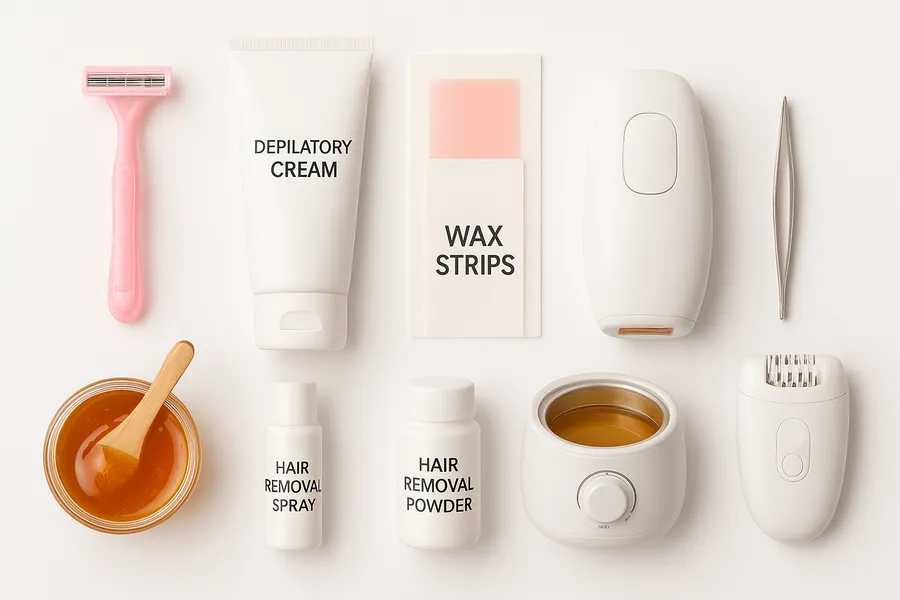
Can IPL actually work on deeper melanin? Short answer: yes — with the right device and smart technique.
Stop waiting for the salon—your skin deserves better. You can get effective at-home IPL results on darker skin tones, but you have to pick the right tool and use it carefully. Shortcuts here can mean irritation instead of smoother skin.
Imagine fewer ingrown hairs and less time shaving each week. With conservative intensity, patch testing, and cooling + proper skincare, IPL can fit into a realistic routine you’ll stick with. Keep it safe, steady, and patient.
Top IPL Devices: Our Picks



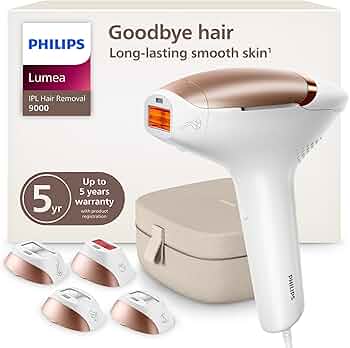
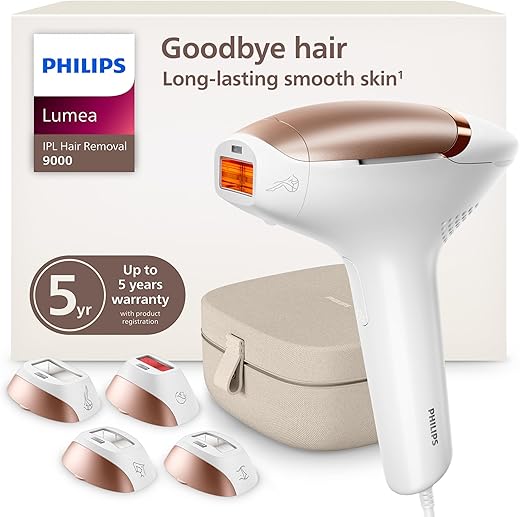
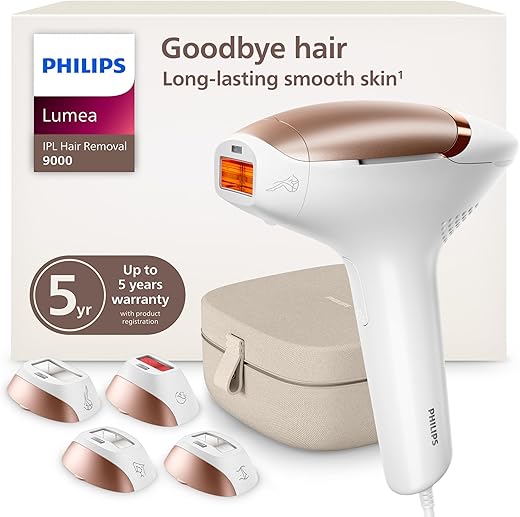
Philips Lumea 9000 Series IPL
You get advanced SenseIQ intelligence, four specialized attachments, and high-quality construction that together make it the most versatile Lumea for comprehensive at-home treatments. It performs best when you follow recommended regimens and use conservative settings with darker skin tones.
Pros
- Four attachments for precise face, bikini, underarm, and body care
- SenseIQ with adaptive skin sensing for safer flashes
- High-quality build and user-friendly controls
Cons
- Premium price relative to simpler IPL units
- Even with advanced sensing, very dark skin tones require cautious patch testing
Overview: purpose and who it’s for
The Philips Lumea 9000 Series is designed for people who want a premium, full-featured IPL system at home. With four attachments and the latest SenseIQ tech, it covers small facial zones and large body areas efficiently. It’s a good fit if you want the most complete Lumea package and are willing to invest in a higher-end device.
Key features, benefits, and a sample routine
- Four purpose-specific attachments for tailored treatments
- SenseIQ skin tone detection to guide intensity selection
- Comfortable treatment ergonomics and long-lasting flash life
A typical beginner routine is twice weekly sessions for the first month, then gradually spacing sessions to maintenance. For darker skin tones, Philips’ adaptive sensor reduces intensity when appropriate, but you should still perform a patch test and start at the lowest recommended setting. An example practical tip: treat a small area on the inner forearm, wait 48–72 hours, and observe for any hyperpigmentation before continuing.
Safety, limitations, and device components
- Do not use over tattoos, permanent makeup, moles, or open wounds. Avoid sun exposure on treated areas for the recommended period.
- If you have concerns about pigment changes, see a board-certified dermatologist before beginning treatments.
Components / “ingredients”: SenseIQ optical sensors, quartz-based flash lamp, silicone-sealed attachment windows, ABS/polycarbonate body, and manufacturer-supplied power adapter. These parts make up the device; they are not topical ingredients and do not represent medical treatment.
Silk'n Infinity Fast Compact IPL
You benefit from dual-energy eHPL technology (galvanic + light) that helps light penetrate more effectively, which can make treatments more comfortable and effective across a wider range of skin tones. Still, start with a patch test and follow conservative intensity settings when you have darker skin.
Pros
- Dual-energy (galvanic + IPL) enhances light absorption
- Compact, travel-friendly design with long-lasting flashes
- Built-in skin color sensor for safer treatment choices
Cons
- Higher price point than many basic IPL units
- Galvanic technology may require more user familiarity
Why this stands out for darker skin tones
Silk'n Infinity Fast combines galvanic current with IPL light (eHPL) to temporarily modify the skin surface, allowing the light to reach hair follicles more effectively. That extra step can improve comfort and expand the device’s usable range for people with medium to darker skin tones, when used cautiously and with conservative settings.
Key benefits and how you’ll use it
- Galvanic enhancement prepares the skin for better light penetration
- Unlimited flashes (no replacement cartridges) for long-term savings
- Automatic skin color sensor helps you pick safer intensities
When you use this device, begin with the lowest energy level and perform a patch test on an inconspicuous area. Example routine: treat twice weekly for the first month, monitor progress, then shift to maintenance every 4–8 weeks as hair growth slows. Because it’s compact and travel-ready, it’s convenient if you travel frequently or need a device that stores easily.
Safety guidance and components
- Avoid use on tattoos, permanent pigment, or inflamed skin and do not treat immediately after sun exposure.
- If you experience prolonged redness or hyperpigmentation after a patch test, discontinue and consult a dermatologist.
Components / “ingredients”: galvanic electrode system, optical IPL lamp window, ABS housing, travel case, and power adapter. These physical components support the dual-energy method; they are not topical chemical ingredients.
Braun Silk·Expert Pro 5 IPL
You’ll appreciate the SmartSkin sensor and fast flash rate that make full-body treatments quick and consistent. It’s a strong pick if you want a straightforward, clinically tested approach, but always perform a test patch on darker skin tones first.
Pros
- SmartSkin sensor auto-adjusts for safer intensity
- High-speed flashes for quicker full-body sessions
- Ergonomic Smart Flex head for better coverage
- Proven clinical testing and app-guided treatment plans
Cons
- May be limited on the very darkest skin tones — perform patch test
- Single head design may need careful angling for small contours
Who should consider this device
The Braun Silk·Expert Pro 5 is aimed at people who want fast, repeatable IPL sessions with smart sensors and an ergonomic head. If you’re a busy user who wants to shorten full-leg or body sessions, the rapid flash cadence and coverage tracker can save you time.
What you get and how it helps
- SmartSkin tone sensor that selects recommended intensity for you
- Real-time coverage tracker prevents missed spots
- Sensitive, balanced, and power settings to fine-tune comfort
In practice, you’ll do short, frequent sessions according to the included regimen (commonly twice a week to start). For darker skin tones, Braun’s sensor reduces risk by lowering intensity when it detects darker skin — but that’s not a guarantee for all skin types. Do an initial patch test on a discreet area and wait the recommended time to check for irritation before full treatment. Many U.S. users pair the device with sunscreen on surrounding areas and avoid sun exposure before and after sessions.
Safety, limitations, and materials
- Avoid treating areas with tattoos, birthmarks, or on recently sunburned skin.
- Keep the device clean and dry; replace or service if the flash window is damaged.
Materials: ABS and PC polymer housing, optical filter window, integrated light source (xenon/flash lamp style), and power supply. These are device components — not topical ingredients — and do not imply a medical treatment.
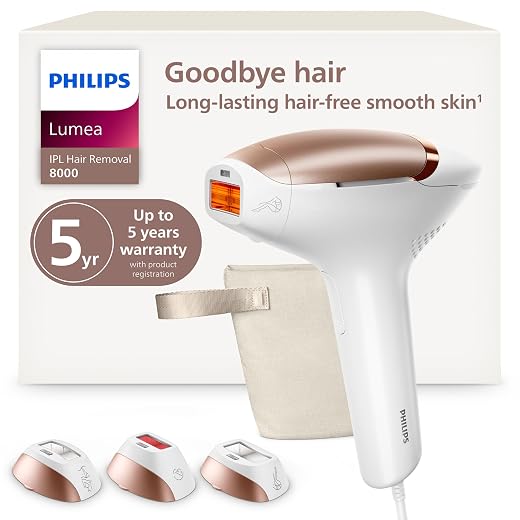
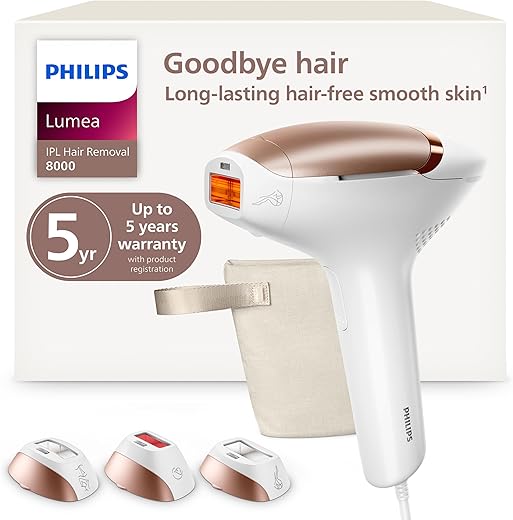
Philips Lumea 8000 Series IPL
You get a comfortable, user-friendly IPL with multiple attachments and intelligent sensing for consistent treatments. It’s designed for regular at-home use and performs well when you follow a steady regimen and do patch tests for darker skin tones.
Pros
- SenseIQ skin sensor adapts flashes automatically
- Multiple attachments for face, body, and intimate areas
- Comfort-focused features for gentler treatments
- Well-built, easy-to-use interface
Cons
- Not explicitly optimized for the darkest skin tones — patch testing required
- Replacement attachments or accessories can add cost
What this device is for
The Philips Lumea 8000 Series is built for people who want a thoughtful, comfortable IPL experience at home. You’ll use it to reduce hair regrowth on legs, underarms, bikini, and facial areas over weeks and months. The SenseIQ sensor helps by detecting skin tone and recommending an intensity, which reduces guesswork and makes it easier to treat mixed areas.
Key features and practical benefits
- Auto-adjusting SenseIQ skin tone sensor for safer flashes
- Three purpose-built attachments for body, face, and sensitive areas
- Ergonomic handle and curved window for better contact and easier use
Using the Lumea is straightforward: start with a patch test, then treat at the manufacturer-recommended intervals. For example, many users treat twice weekly at the start, then move to maintenance sessions every few weeks. If you have deeper skin tones, you should proceed cautiously and do small patch tests — Lumea can be used safely by many people with darker skin when used at conservative intensity levels and with careful monitoring of results.
Limitations, safety notes, and ingredients/components
- IPL effectiveness varies by hair color and skin contrast; darker pigment in skin can absorb more light energy and raise risk of irritation. You should always perform a patch test and follow the device’s skin-sensing guidance.
- Avoid use on tattoos, permanent makeup, or recently tanned skin, and do not treat on open wounds.
Components / “ingredients”: medical-grade polycarbonate housing, quartz-based IPL lamp, integrated skin-tone sensor, power adapter, and silicone seals on attachments. These are materials and parts, not topical ingredients. Always use only the supplied power adapter and follow the manual for safe operation.
INNZA IPL with Ice Cooling
You’ll notice the built-in ice cooling feature, which helps make treatments more comfortable and reduces immediate redness for many users. The device offers many flashes and intensity levels, but its suitability for very dark skin tones is limited — always patch test and consult guidance.
Pros
- Built-in ice cooling for added comfort
- High flash count (long-lived device)
- Nine intensity levels and two modes for flexibility
Cons
- Manufacturer notes IPL may be ineffective on darker skin tones
- Plug-in operation limits portability
Overview and intended use
The INNZA IPL device targets at-home hair reduction with a focus on comfort — the standout feature is its ice-cooling system to soothe the skin during flashes. It’s built with a high flash count so you won’t worry about replacement lamps for years.
Features and user experience
- 999,999 flashes designed for long-term home use
- Ice cooling care function to minimize redness and swelling
- 9 energy levels and auto/manual modes for large and small areas
For beginners, you’ll want to start at the lowest intensity and do a careful patch test. INNZA’s documentation explicitly warns that IPL is most effective on light to medium skin tones with dark hair; this makes it less reliable for deeper skin tones. If you have medium-dark or dark skin, treat a small patch and wait 48–72 hours to monitor for discoloration or prolonged irritation.
Practical tips, safety, and components
- Do not use on tattoos, permanent makeup, or on sunburned or broken skin.
- Keep sessions consistent for the recommended timeframe to see gradual reductions in regrowth.
Components / “ingredients”: ice-cooling module, xenon-type flash lamp, plastic housing, and AC power adapter. These are device parts; there are no topical ingredients supplied with the unit.
Final Thoughts
Best overall: Philips Lumea 9000 Series IPL — Choose this if you want the most versatile, feature-rich at-home system. Its SenseIQ sensors and four treatment attachments make it ideal for full-body use and for users who want a device that adapts to different areas. Strengths: strong tech package, multiple attachments, polished build. Best for: people who plan to treat legs, underarms, face, and bikini with a single, future-proof device.
Best for darker skin tones: Silk'n Infinity Fast Compact IPL — Pick this if your top priority is technology tuned to tougher skin contrasts. The dual-energy eHPL (galvanic + light) helps the light work more effectively across a broader range of skin tones while often improving comfort. Strengths: better performance on darker tones, compact design, comfortable sessions. Best for: first-time home users with medium-to-darker complexions who want a device designed to be safer and more comfortable for higher melanin levels.
If you need speed and convenience for large areas, the Braun Silk·Expert Pro 5 is the runner-up: it’s fast, sensor-driven, and excellent for busy schedules.
How to Choose and Use IPL on Darker Skin Tones — A Practical Guide
Choosing the right IPL starts with two priorities: a device built to handle higher melanin safely, and a conservative, consistent protocol you’ll actually follow. Devices like the Philips Lumea 9000 offer advanced sensors and multiple attachments for different body zones; Silk'n Infinity’s dual-energy eHPL is specifically designed to improve comfort and efficacy on deeper skin tones. Braun’s Pro 5 is your pick if speed matters most.
Quick comparison (features that matter)
- Philips Lumea 9000: SenseIQ sensors, 4 attachments, versatile for face/body. Best for users who want an all-in-one, high-end machine.
- Silk'n Infinity Fast Compact IPL: eHPL (galvanic + light) tech, compact size, kinder on darker tones. Best for people prioritizing safety and comfort on higher melanin.
- Braun Silk·Expert Pro 5: fast flashes, SmartSkin sensor, clinically tested tech. Best for busy users doing large areas quickly.
- Philips Lumea 8000: balanced comfort and power with attachments; a solid midrange Lumea.
- INNZA IPL with Ice Cooling: built-in cooling to reduce immediate redness; consider for comfort but be cautious on very dark tones.
Preparation and safety checklist
- Patch test first: Always test and wait 48–72 hours. Document results with a photo.
- Stop photosensitizing actives: Discontinue retinoids, exfoliating acids, and strong peels 48–72 hours before and after sessions.
- Shave, don’t wax: Shave the treatment area 24 hours before to let the light target follicles below the skin without surface hair burning.
- Cooling and pain management: Use a cooling attachment, ice pack, or a post-treatment aloe gel to calm the skin. Over-the-counter topical numbing is usually unnecessary and not recommended unless directed by a pro.
Post-treatment care and ingredients
Focus on calming, hydrating, and sun-protective measures. Useful ingredients and products include:
- Aloe vera gel (pure or >90%): soothes immediate redness.
- Hyaluronic acid: lightweight hydration to prevent tightness.
- Vitamin E or panthenol (pro-vitamin B5): support skin comfort.
- Centella asiatica (cica): soothing botanical for irritation-prone skin.
- Sunscreen: broad-spectrum SPF 30+ every day on treated areas — physical blockers (zinc oxide / titanium dioxide) are preferable right after sessions.
Avoid: retinoids, benzoyl peroxide, chemical exfoliants, or any strong topical that increases photosensitivity for 48–72 hours after treatment.
Realistic regimen example (beginner-friendly)
- Weeks 0–8: Treat every 2–4 weeks for 3 sessions depending on the device’s guidance and your hair cycle. Use the lowest effective intensity that produced no adverse patch reaction.
- After initial series: Move to maintenance every 1–3 months as you see reduced regrowth.
- Track results: Take photos under consistent lighting and note settings used so you can adjust safely.
When to stop and seek help
If you get blistering, persistent hyperpigmentation (dark spots), or unusual pain beyond a day or two, stop using the device and consult the manufacturer or a dermatologist. Also pause treatments if you’re starting a new topical prescription (like prescription retinoids) or planning professional light-based procedures.
Bottom line: With the right device (Philips Lumea 9000 or Silk'n Infinity for darker skin tones), conservative settings, patch testing, and thoughtful post-care, you can make IPL a safe and effective part of your routine. Be patient, document progress, and prioritize safety over speed — your skin will thank you.
FAQ
Is IPL safe for dark skin tones?
IPL can be used on darker skin tones with the right device and careful technique. Devices that specifically mention better performance on darker tones (like those with dual-energy tech or advanced skin sensors) are preferable. Always do a patch test on the exact area, start at the lowest setting, and wait 48–72 hours to check for any pigment or irritation changes.
How do I patch-test IPL safely?
Pick a discreet spot where you’ll treat later (inner thigh or lower abdomen). Shave, clean, then run 2–3 flashes at the lowest intensity. Wait 48–72 hours and inspect for redness, blistering, or darkening. If anything unusual appears, stop and contact the manufacturer or a dermatologist before proceeding.
What pre- and post-treatment skincare should I use?
Before: shave cleanly, avoid retinoids or acids for 48–72 hours, and cleanse gently. After: cool the area (ice or cooling attachment), apply a calming gel (aloe vera or 1% hydrocortisone only if you know you tolerate it), and use broad-spectrum sunscreen (SPF 30+). Ingredients to seek: aloe vera, hyaluronic acid, vitamin E, centella asiatica. Ingredients to avoid around sessions: retinol, glycolic acid, and strong chemical peels.
How often will I need to use IPL to see results?
Typical at-home regimens start with treatments every 2–4 weeks for 3–4 sessions, then shift to maintenance every 1–3 months. Individual hair cycles vary, so expect to track progress and adjust frequency. Patience and consistency are key — sudden expectations often lead to overuse and irritation.
Can I use IPL on tanned skin or recently sun-exposed skin?
No — avoid using IPL on freshly tanned or sunburned skin. Increased melanin from tanning raises the risk of burns and pigment changes. Wait until the tan has faded and your skin has returned to its normal tone, usually a few weeks depending on exposure.
Will IPL work on all hair colors?
IPL works best on darker pigment (brown or black hair). Very light blonde, gray, white, or red hairs have less melanin for light energy to target and typically respond less well to IPL devices.
Great roundup — thanks! Quick question: the Philips Lumea 9000 scores really high, but I have very dark skin (Fitzpatrick V). Is it actually safe to use at home on darker tones, or should I avoid it altogether?
I’ve read mixed things about IPL and darker skin, and the article’s note about “conservative settings” was a little vague. Would love a practical tip on how to start (which attachment, what intensity, how long between sessions).
I have Fitzpatrick V too — I used Lumea 8000 conservatively. Patch test on the inner thigh first. Took longer than I expected but no burns. Patience is key!
Good question, Olivia. Short answer: you can use devices like the Lumea 9000 on darker skin, but always patch-test first. Start at the lowest intensity, wait 48–72 hours to check for reactions, and increase slowly only if no redness or hyperpigmentation appears. Use the facial attachment for smaller areas and the body attachments for legs/arms. If in doubt, consult a dermatologist before starting.
Also note: devices with skin sensors (Silk’n, Braun) add an extra safety layer but are not foolproof. The dual-energy tech in the Silk’n Infinity can be gentler for darker tones, according to the roundup.
Loved the comparison table — saved me time. Quick face-specific question: which of these is safest for upper lip removal on darker skin? I saw Silk’n has an automatic skin color sensor, but the Philips also has SenseIQ. Any preferences?
Remember: avoid active acne, recent tanning, and always follow the device’s facial guidelines. Upper lip skin can be sensitive, so spacing sessions out helps.
For small facial areas like the upper lip, devices with a dedicated face attachment and conservative settings are best. Silk’n’s sensor is helpful, and its dual-energy tech can be gentler. Philips’s SenseIQ adapts well too. Again — very small patch tests on the jawline/cheek first, then proceed slowly.
I used the Philips face attachment at the lowest setting and it was fine, but I was careful. If anxious, go to a pro for the first session to see how your skin reacts.
I purchased the Philips Lumea 9000 after reading this and I’m really happy with the attachments — the face one is tiny but precise. Used it for about 4 months and hair regrowth is way slower.
One minor gripe: it’s a bit bulkier than the compact Silk’n Infinity, so if you travel a lot the Silk’n might be better (travel case included). Overall though, Lumea feels more premium.
Thanks for the feedback, Sophie. That’s in line with the expert verdict: Lumea is more feature-complete, Silk’n is great for travel and dual-energy benefits. Good to hear your results!
I bought the Silk’n for traveling and it’s great for quick touch-ups. Not as powerful as Lumea but super convenient.