

 Good Looking
Curious which one gives your skin longer-lasting smoothness and is easiest for first-time users in the US—get a beginner-friendly, practical guide with safety tips, ingredient-aware advice, and real-use examples to help you decide.
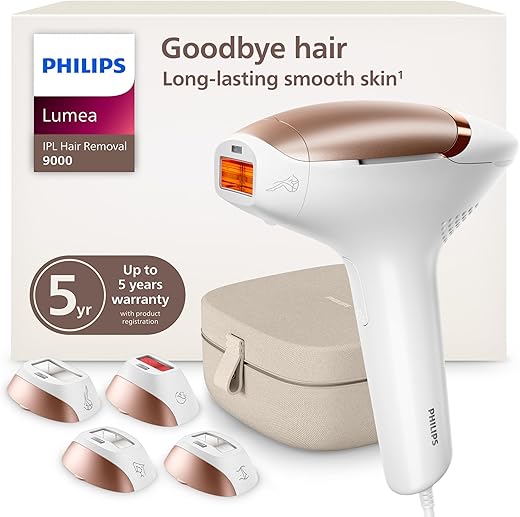
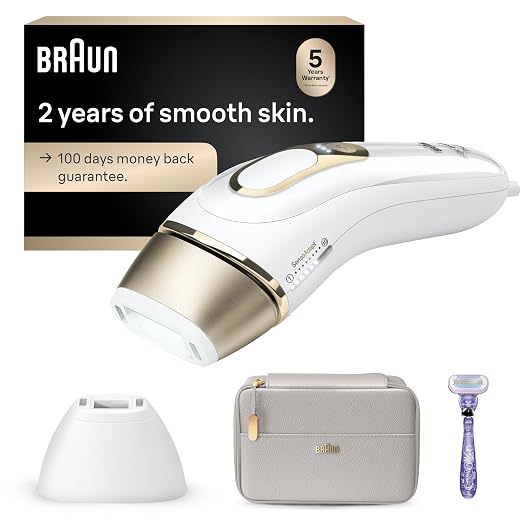
This guide gives you a clear, side-by-side look at the _Philips Lumea 9000 (BRI984/03) and Braun Silk·Expert Pro 5 (IPL5157)_, helping you choose the at-home IPL device that fits your skin tone, hair type, budget, and safety needs and confidently.

Braun Silk Expert Pro 5 vs. Philips Lumea: Die beste Alternative zur Laser-Haarentfernung?
How IPL Works, What to Expect, and Safety BasicsIPL basics — in plain words
IPL (intense pulsed light) sends short flashes of broad-spectrum light into your skin. The light is absorbed by pigment in the hair shaft, heats the follicle, and over repeated sessions reduces active hair growth. In a Philips Lumea vs Braun Silk-Expert comparison, both use the same IPL principle — different sensors and flash patterns, same idea: gradual reduction, not instant removal.
What to expect and timing
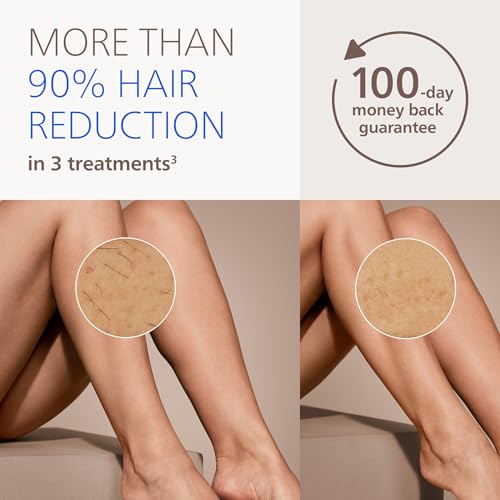
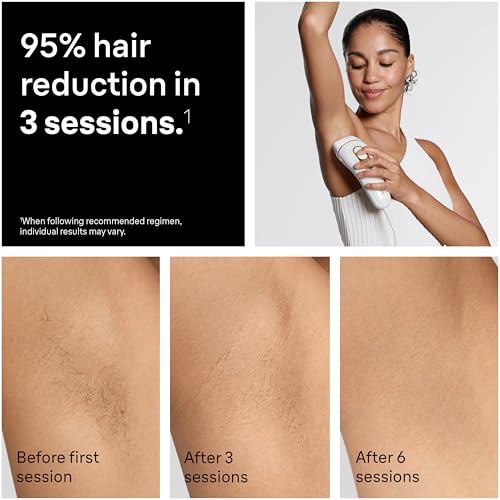
Expect visible thinning after a few sessions; many users see changes in 2–8 weeks with regular treatments. You’ll follow an initial schedule (weekly or bi-weekly) then switch to monthly touch-ups. Small areas respond faster; coarse or hormonal hair can need longer.
Beginner-friendly patch test
- Shave and clean a small 2×2 inch area.
- Choose a low-to-mid intensity per the device sensor.
- Do 1–3 flashes in that spot.
- Wait 24 hours — check for redness, blistering, or strong discomfort.If irritation appears, stop and consult the manual or a professional.
Safety basics — do’s and don’ts for at-home IPL safety
- Do protect eyes; use built-in contact sensors or follow device eye guidance.
- Don’t treat over tattoos, dark moles, or active skin infections/eczema.
- Avoid tanning: don’t sunbathe or use tanning beds for about 2 weeks before and after treatments.
- Don’t use if you’re on photosensitizing medication — check with your provider.
- Consult a dermatologist if you have skin cancer history, are pregnant, or have unclear reactions.
Ingredients — what’s inside an IPL unit
- Flash lamp (broad-spectrum light source)
- UV filter
- Skin tone sensor (SmartSkin / SensoAdapt)
- Plastic/ABS housing
- Silicone seals (around attachments)
- Power adapter
Practical example — first underarm treatment
Shave, dry, set a comfortable intensity, then flash each underarm area methodically. Total time: about 5–10 minutes including prep. You’ll feel brief warm snaps; mild redness can appear and usually fades within hours.
Form factor & attachments
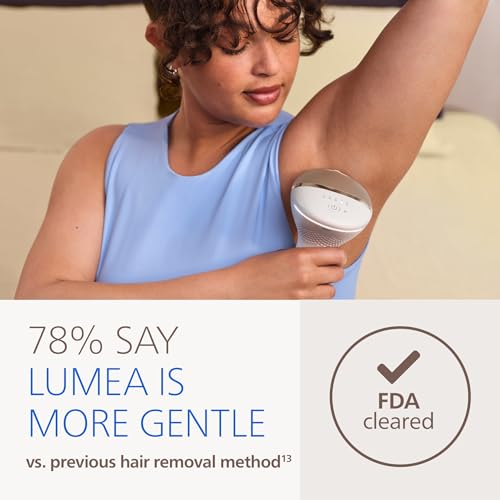
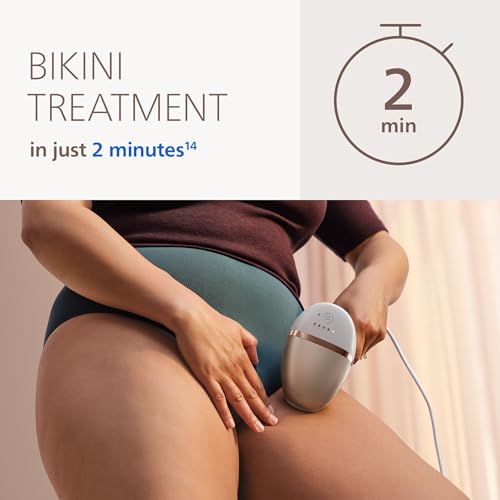
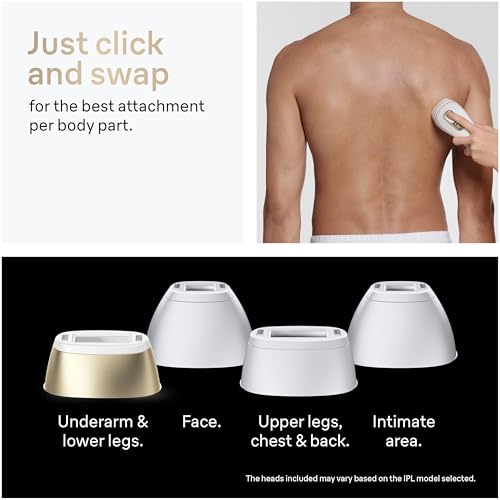
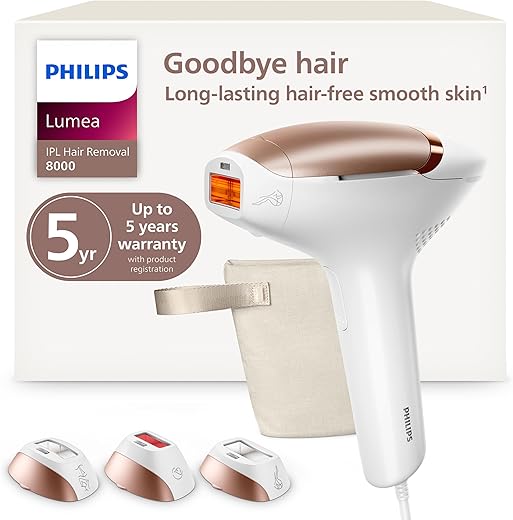
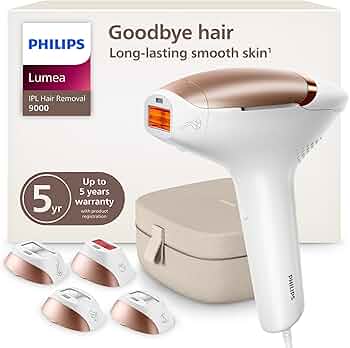
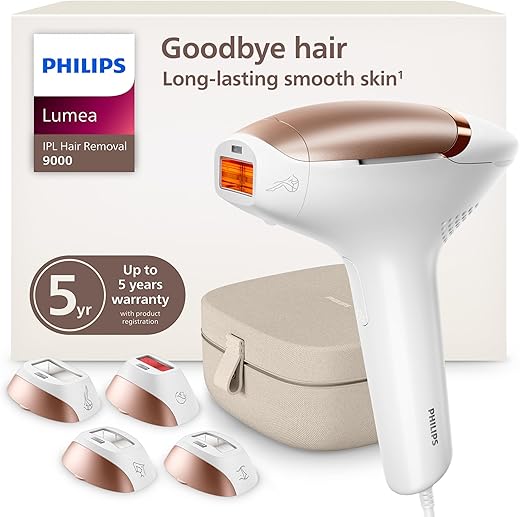
Philips Lumea 9000 comes with four curved attachments (body, face, bikini, underarms) that hug contours so you can treat curves without awkward angling. The unit is corded for uninterrupted power and feels balanced in your hand.
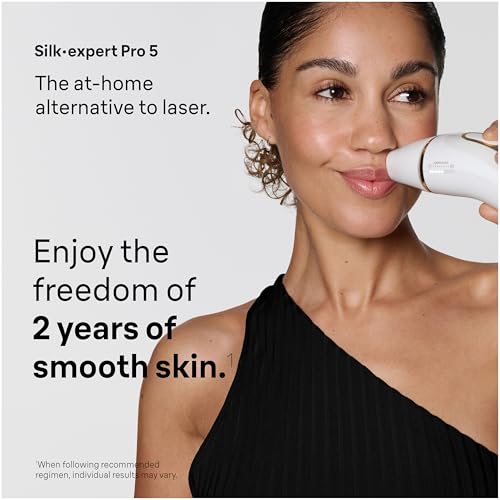
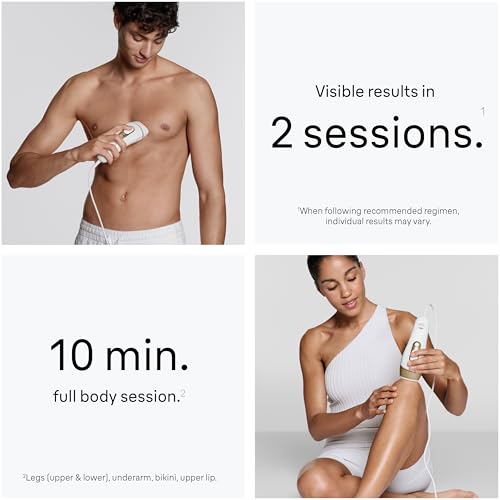
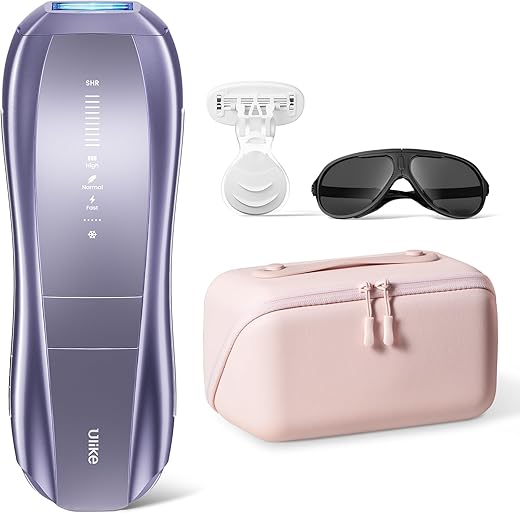
Braun Silk·Expert Pro 5 ships with a standard head and a precision head, plus a zip pouch and a Venus razor for prep. The Pro 5’s head options cover most areas but aren’t as specialized for curves as Philips’ four-piece set. Braun is also corded and designed for fast gliding.
Weight, grip, and display
- Philips: slightly heavier feel, soft-touch coating, app connectivity for schedules and settings.
- Braun: lighter and sleeker, simple LED/readout, three power modes including sensitive settings.
Auto-adjusting skin sensors
- Philips SenseIQ / SmartSkin recommends one of five intensity settings based on your skin tone.
- Braun SensoAdapt (SkinPro 2.0) continuously adjusts flash intensity every pulse for real-time tuning.Both make choosing a level easier — you still perform a patch test first.
Swapping, cleaning, and session time
- Swap attachments by pressing the release tab and snapping the correct head on; store extras in the pouch (Braun) or box (Philips).
- Clean by wiping the lamp window with a dry, lint-free cloth; avoid liquids and submerging the device.
- Typical full-leg session: Philips ~10–15 minutes depending on your technique; Braun often faster, frequently under 10 minutes thanks to rapid flashes.
Safety features & materials
Both use skin-contact sensors, built-in lock modes, and pulse triggers to prevent accidental flashes. Key materials: ABS plastic housing, soft-touch coating, silicone seals, and tempered lamp-window glass — all chosen for durability and comfort. For example, you’ll feel a firmer grip on Philips’ thicker handle and quicker strokes with Braun’s lighter body.
Performance, Results Timeline, and Real-World User ExperienceFlash power, lamp life, and what manufacturers share
Both brands avoid publishing raw joules per flash. Philips Lumea 9000 uses SmartPulse with five intensity settings and body-specific attachments; Braun Silk·Expert Pro 5 uses SkinPro (SensoAdapt) and three power modes. Braun advertises up to 125 flashes per minute; Philips focuses on balanced pulse duration for comfort. Neither model has a user-replaceable lamp window — both are built to last for many full-body treatments (users report months-to-years of use).
Speed and typical session time
- Philips Lumea 9000: users report full-leg sessions ~10–15 minutes (curved attachments make contour work slower but precise).
- Braun Pro 5: fast flashes often let you finish legs in under 10 minutes; users praise quick coverage thanks to rapid pulses.
Results timeline — user-reported outcomes
- Philips users often report visible reduction after about 2 sessions and major reduction by 3–8 sessions (product literature and reviews echo early visible change).
- Braun users commonly report noticeable thinning in 4–12 weeks; some Amazon reviews reference rapid early change when used weekly/bi-weekly.
Expect individual results to vary by hair color, thickness, and body area.
Comfort, pain, and consistency (Amazon-sourced observations)
- Philips pros: gentler feeling on curvy areas, app-guided consistency; cons: takes a bit longer per area.
- Braun pros: very fast, efficient coverage; cons: higher-intensity settings can feel sharper on sensitive skin.
Many reviewers call both “tolerable” with numbing cream or low settings for sensitive areas.
Concrete at-home plan & milestones
- Initial phase: every 2 weeks for ~4–12 weeks (4–8 sessions recommended).
- Maintenance: every 4–8 weeks thereafter.
Milestones: after 2 sessions you may see thinner regrowth; by 4 sessions noticeable reduction; by 8+ sessions large areas may be largely hair-free.
Safety reminders & maintenance “ingredients”
- Don’t overlap flashes excessively; do patch tests; avoid broken/inflamed skin; check medications/photosensitivity warnings.
- Key components to monitor: flash module/lamp window, attachment seals, and power cord. Clean lamp window after each use; contact manufacturer for lamp-module issues — these parts aren’t typically user-serviceable.
Feature Comparison Chart
Price, Value, Warranty, and Which One Should You Buy?Price vs. bundle value
- Philips Lumea 9000: about $580 on Amazon — includes 4 attachments (body, face, bikini, underarms) and app-guided plans.
- Braun Silk·Expert Pro 5: about $420 — includes 2 heads (standard + precision), travel pouch, and a Venus razor.
If you want more specialized attachments out of the box, Philips gives you extra treatment heads. If you want a ready-to-go travel kit and a razor for prep, Braun’s bundle adds immediate value.
Long-term costs & parts (“ingredients”)
Check these components: flash lamp/module, attachment seals, skin sensor, power cord. Neither device has a user-replaceable lamp window — they’re built for many full-body treatments, but replacement/repair usually goes through the manufacturer. Factor potential replacement/repair fees if you plan heavy use.
Warranty, support, and Amazon buying tips
- Verify warranty length and who ships the item (Amazon vs. third-party). Many listings show 1–2 year limited warranties — confirm in product details.
- Check return window (Amazon standard 30 days for most items) and read recent customer Q&A about exchanges.
- Look for “sold by” and “fulfilled by Amazon” for easier returns and customer support.
Which to pick — buyer scenarios & safety notes
- Best for sensitive skin: Braun (SensoAdapt + two sensitive modes). Start at lowest power and patch-test a small area.
- Best for speed: Braun (up to 125 flashes/min). Use steady motions; eye safety still applies.
- Best bang-for-buck: Braun — lower price + pouch/razor included.
- Best for face precision: Philips — dedicated face attachment + app guidance; still patch-test and avoid male facial use.
- Best travel option: Braun — includes pouch; both are corded, so you need an outlet.
Quick pros/cons
- Philips Lumea 9000 — Pros: more attachments, 5 intensity levels, app plans. Cons: higher price, corded.
- Braun Silk·Expert Pro 5 — Pros: faster flashes, adaptive SensoAdapt, pouch & razor included, lower price. Cons: fewer specialized curved attachments, can feel intense at high power.
Final Verdict — Which Is Better for You?
Philips Lumea 9000 is the overall winner for most users — more attachments (face, body, bikini, underarm), SenseIQ settings, and gentler pulses make it ideal if you want precision or have sensitive skin. Braun Silk·Expert Pro 5 wins for time-conscious or budget shoppers — faster flashes and a Venus razor included save time and money.
Safety tip: always perform a patch test, follow the manufacturer guide, and check Amazon return/warranty. Ingredients/components: IPL lamp, attachments, power adapter, pouch, razor. For example, use the face attachment on upper lip. Compare current Amazon prices and reviews before buying.
Question from someone with darker skin: how safe are these on darker tones? I’ve read sensors help, but worried about pigmentation or burns.
My cousin (darker skin) used the Braun with caution and saw slow but steady results — patch tested for a week first. No burns, but progress was gradual.
Also remember hair color matters — very light blonde or red hair tends to respond less to IPL regardless of skin tone.
I second the patch test. The sensor is helpful but not infallible. Start low and go slow.
Important question. Both devices include skin-tone sensors or adaptive tech, but IPL in general works best on lighter hair and certain skin tones. Always consult the device’s skin tone chart in the manual and do a patch test. If in doubt, check with a dermatologist.
Quick technical Q: anyone know about the lamp/flash life on either device? I’m trying to decide if it’s a one-time purchase or something I’d need to replace down the line.
Good question. Manufacturers rate flash counts differently — Philips and Braun both design these for many thousands of flashes, but exact numbers vary by model and usage. Best to check the user manual for the BRI984/03 and IPL5157 for the rated flashes and warranty details.
I used my Lumea for over a year (biweekly at start) before noticing any drop in performance. YMMV depending on frequency and settings.
Tried the Braun Silk·Expert Pro 5 (IPL5157) for my legs and underarms — here’s my two cents:
1) It really is fast, especially on larger areas.
2) Came with that Venus razor which is a cute bonus (saved me a trip to the store lol)
3) I needed a few more sessions than I expected to see “permanent” reduction
4) Less ouch than waxing but not totally painless
Overall: solid for at-home use, but patience required. 🙂
I got mine on sale with a pouch and the razor included. Watch for holiday deals.
Liam — I got it during a sale for less than full price. If you’re patient, they pop up often.
Great summary, Hannah. For readers: Braun’s speed is a big selling point; consistency is key — most manufacturers recommend 12 weeks/12 sessions to assess progress.
Not thrilled with the Philips — feels a bit heavy and awkward for underarms. The Lumea is top-tier but ergonomically it’s not perfect. Braun felt lighter in my hands. Also, for budget-conscious folks: Braun often wins on value when it’s on sale. Philips is sleek but you pay extra for that tech/brand name.
Do you think the extra cost of the Philips is justified for the SenseIQ stuff? Or is it mostly marketing?
I felt the same — Philips felt chunkier to me. Ended up leaning Braun for that reason.
As a guy using it on chest/back, the weight didn’t bother me much. Different uses, different feels!
Fair points, Oliver. Ergonomics and weight are important for at-home devices since you do repetitive passes. If underarm comfort is a priority, trying one in-store (if possible) or checking hand feel reviews can help.
Heads up — both of these are marketed for women and men. I use mine on chest/back with good results. Not for facial beards obviously, but body hair reduction works fine for most guys too.
Good to know for guys — thanks. I’m curious how it works on coarser hair though; did you find it less effective?
Yep — did chest and lower back with the Lumea. Took longer but definitely reduced density over months.
Thanks for pointing that out, Ava. Many users overlook that ‘for men and women’ note. Just avoid using IPL on tattoos, very dark moles, or areas with certain skin conditions.